

A team of researchers from Loughborough University has unveiled a pioneering battery system that could transform access to clean energy and cooking in remote African communities.
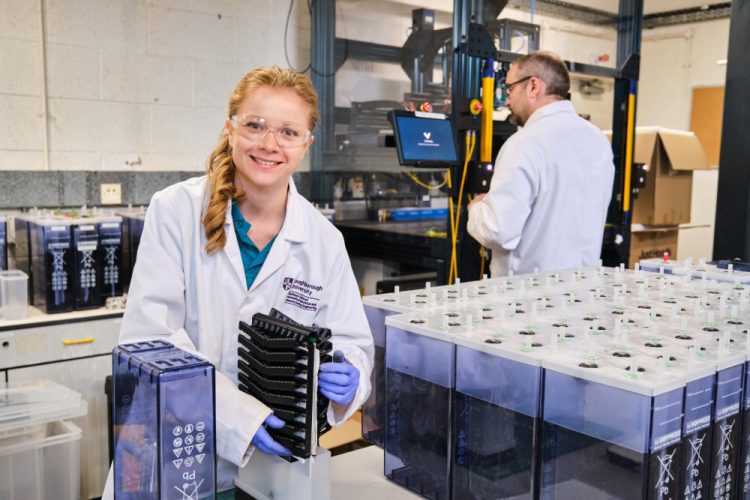
The innovative battery electrolyser, developed by experts from the university’s School of Mechanical, Electrical and Manufacturing Engineering, is designed to both store electricity and produce hydrogen — offering a sustainable alternative to traditional biomass fuels used for cooking.
Picture credit: Loughborough University
Currently, millions across sub-Saharan Africa rely on burning wood or other forms of biomass for cooking, a practice that contributes to deforestation, resource depletion, and air pollution. The smoke from open fires and stoves is a leading cause of premature deaths, especially among women and children.
The new system aims to provide a cleaner, greener alternative. By storing energy generated from solar panels, the electrolyser splits water into hydrogen and oxygen through a process called electrolysis. The hydrogen produced can then be used as a fuel for clean cooking, while the stored electricity can power homes, schools, and health facilities.
“The battery electrolyser we’ve created is going to a school in Zambia, where it will provide electricity for classrooms and teachers’ houses, and hydrogen for clean cooking,” explained Dr Lizzie Ashton, Senior Research Associate and project lead. “Many communities in sub-Saharan Africa lack access to reliable power. Our goal is to help deliver energy sustainability through renewable technology.”
The modular system allows each battery cell to be connected to meet varying energy demands.
“Each individual cell in the unit is a battery,” added Dr Toby Reisch, a Research Associate on the project. “The system can power lighting for schools, provide backup electricity for hospitals, and produce enough hydrogen to cook for an entire community each day.”
If successful, the researchers hope to expand the use of the technology across multiple sectors. In the UK, it could help reduce the curtailment of renewable energy — especially from wind farms — and replace diesel backup generators used in off-grid locations such as construction sites and film sets.
Diesel generators are a major source of carbon emissions and pollutants, while the new battery electrolyser system produces zero emissions, offering both electrical power and hydrogen fuel from entirely renewable sources.
“We see this as a truly global technology,” said Dr Ashton. “It can support clean energy access in developing regions while also helping the UK make better use of its renewable resources.”