

Excavations at Leicester’s Market Place have revealed an extraordinary timeline of human activity spanning more than two millennia, according to the University of Leicester Archaeological Services (ULAS).
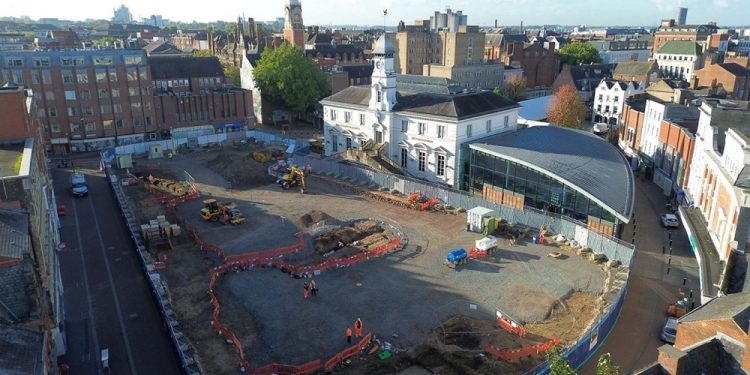
The team’s work, part of the city council’s redevelopment of the historic site, uncovered timber buildings dating to the earliest Roman occupation, Leicester’s first medieval market hall from the 15th century, and the remains of a notable 16th-century civic building. A hoard of approximately 30 Roman coins was also discovered.
Picture credit: Leicester City Council
“For an archaeologist, opportunities like this come along perhaps once in a career,” said Joseph Peters, archaeological supervisor at ULAS. “Investigating such a key part of the historic core has been both a privilege and an extraordinary experience. These discoveries now contribute directly to our growing understanding of Leicester’s unfolding story.”
Layers of History Revealed
The earliest finds at the site indicate human activity as far back as 4000–2500 BCE. Prehistoric flints, including cutting tools from the Neolithic period, suggest early communities were drawn to the fertile river terraces that would later attract the Romans.
Roman-era structures included timber buildings and rare pottery kilns, shedding new light on domestic life and small-scale industry in the city. The coin hoard, currently undergoing conservation, dates from the 4th century, a period of political and economic turbulence across the Roman Empire.
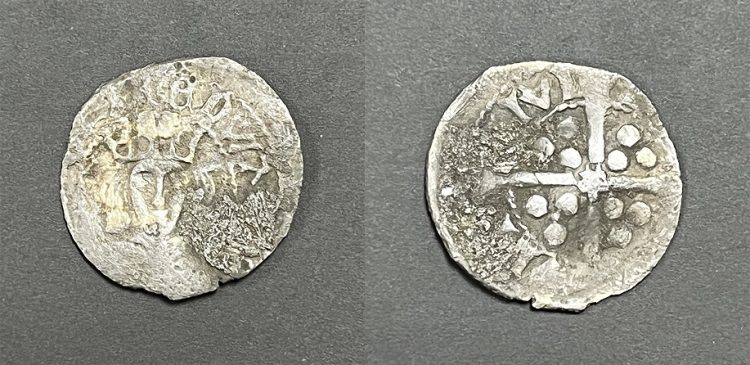
Medieval discoveries included the Shambles and Drapery, Leicester’s 15th-century market hall housing butchers, drapers, and shoemakers, along with the Gainsborough Chamber, a 16th-century civic building with its own dungeon. Archaeologists also documented hundreds of postholes, traces of market stalls, and cobbled surfaces, alongside numerous artifacts such as coins, keys, pottery shards, glass bottles, animal bones, and a leather shoe.
Picture credit: Leicester City Council
Dr. Gavin Speed, ULAS project manager, said: “This central area of Leicester had remained largely untouched beneath centuries of redevelopment. Excavating Roman buildings, early medieval deposits, and the earliest phases of the medieval market stacked one above the other has allowed us to peel back nearly two millennia of history right in the city centre.”
Next Steps
While the main excavation is complete, ULAS will continue monitoring the site during ongoing redevelopment to record any further discoveries. Analysis of the finds is underway, with plans to publish detailed results and make the most significant artifacts available for public display.
City Mayor Peter Soulsby commented: “It’s been extraordinary to watch the archaeologists reveal thousands of years of human activity in the heart of Leicester. These discoveries will help chart the evolution of the market from Roman times to the post-medieval period, shedding new light on an area of the city that has remained largely unexplored.”
For more information about the discoveries, visit ulasnews.com