

A Leicester mother is speaking out to raise awareness of an extremely rare condition after doctors discovered a 15kg, non-cancerous but aggressive tumour growing in her abdomen.
Nineteen-year-old Lola O’Neill returned to the Leicester Royal Infirmary just five weeks after giving birth, suffering excruciating pain and severe swelling that left her looking “around six months pregnant”.
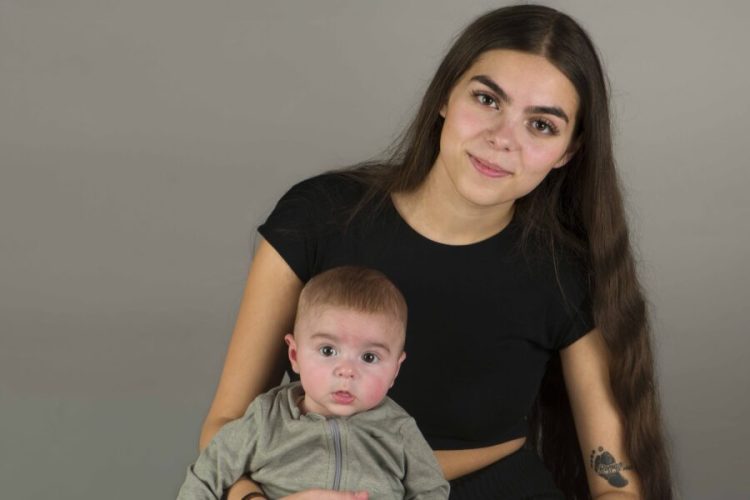
Picture credit: University Hospitals of Leicester
Scans revealed a large mass in her abdomen. Following an ultrasound and CT scan, Lola was referred to the East Midlands Retroperitoneal Sarcoma Service at the Queen’s Medical Centre for a biopsy.
“I had no idea if it was cancer or not,” she said. “I had a newborn baby, and my stomach was just getting bigger and harder. I didn’t know if I was going to live to see my twentieth birthday, let alone see my little boy grow up. It felt like a nightmare.”
Tests confirmed the lump was a desmoid-type fibromatosis — sometimes known as a desmoid tumour or aggressive fibromatosis — an extremely rare growth arising from connective tissue. Although non-cancerous and unable to spread to other organs, such tumours can grow quickly and invade nearby tissues, blood vessels and nerves.
Doctors believe hormonal changes following pregnancy, particularly increased oestrogen levels, may have triggered the tumour’s rapid growth.
Lola was referred to Professor Samuel Ford at the Midlands Abdominal and Retroperitoneal Sarcoma Unit at the Queen Elizabeth Hospital Birmingham, where she underwent a five-hour operation to remove the mass.
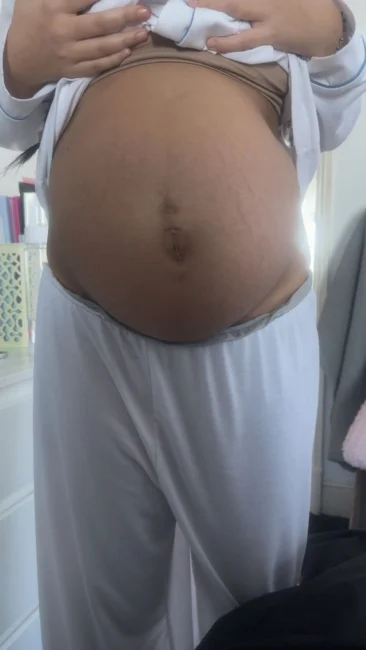
Picture credit: University Hospitals of Leicester
“It had attached itself to my colon and pancreas, and by the time I was admitted for surgery, I looked nine months pregnant again, but I was a distorted, twisted oblong shape,” she said.
After spending five days in intensive care followed by further recovery on the wards, Lola was able to return home. She will now be closely monitored for the next 10 years to check for any recurrence.
She is sharing her experience to mark Rare Disease Day, a global awareness event held annually on 28 February to highlight rare medical conditions.
“I had no idea it was there and still don’t know how long it was there,” Lola said. “I’m so glad it’s now out, but I do want other people to be aware of these types of tumour and how quickly they can develop. Even though they are rare, they can happen to anyone.”
Professor Ford said most desmoid tumours do not require surgery, as they often stabilise and can be monitored with MRI scans. If they begin to grow, they can frequently be controlled with medication.
“However, there is a subset of fibromatosis that we see — thankfully very rarely — in young women that can grow rapidly and relentlessly and can be very difficult to control with medications,” he said. “Lola had this type, and it is very likely to have been stimulated to grow rapidly by pregnancy-related hormones. In Lola’s case, if the tumour had not been removed when it was, its rapid growth would likely have led to severe and potentially life-threatening consequences.”
Professor Robert Ashford, lead clinician for the East Midlands Sarcoma Service, added: “We are glad that Lola is recovering well from her surgery, and we are grateful that she is helping to raise awareness of the condition. We are proud that our integrated service across the Midlands enabled us to work closely with neighbouring trusts to diagnose and treat the tumour in a timely way.”