

Leicestershire’s newest wildlife haven is beginning to take form on land that was once an opencast coal site near Ravenstone and Heather.
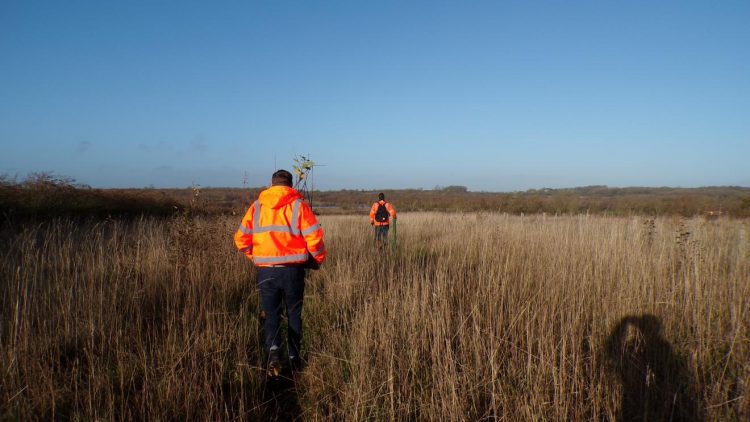
Nine hectares off Heather Lane have been carefully redesigned to encourage nature to return and to link with the surrounding countryside. Thousands of native trees now cover much of the area, while large sections have been left as open grassland to provide shelter for small mammals and priority conservation species.
Picture credit: Leicestershire County Council
Around 12,000 mixed native trees were planted in 2022 through funding from the National Forest, part of the wider effort to extend the county’s green corridors. Roughly 40 per cent of the site remains as open space, sown with tussock grass to create the varied landscape needed for insects, mammals and ground-nesting birds.
Barn owls have already been identified as one of the key species that could benefit. A number of nesting boxes have been installed to encourage the birds to breed, raising hopes that the distinctive white owls will soon become regular residents.
The habitat connects directly to nearby paths and public footpaths, making the area accessible for walkers and cyclists who want to see the transformation for themselves.
Environmental groups say projects like this show how former industrial land can be given a new purpose. The work also supports the recently launched Local Nature Recovery Strategy for Leicestershire, Leicester and Rutland, which sets out areas where habitats can be restored and joined together, with added benefits such as lower flood risk and support for tackling climate change.
Councillor Adam Tilbury, Leicestershire’s cabinet member for environment and flooding, welcomed the progress. He said: “The Ravenstone project is a fantastic example of how land can be repurposed to benefit both wildlife and local communities. By creating habitats that support species such as barn owls and linking them to the wider landscape, we’re helping nature to thrive while contributing to the National Forest and our Local Nature Recovery Strategy.”
Local residents have watched the change unfold over recent years, recalling earlier woodland creation south of Ravenstone village in the early 2000s. Many hope the latest habitat will bring even more opportunities to enjoy wildlife close to home.
As the trees mature and the grassland establishes, the once-scarred coal field is expected to grow into a rich mix of woodland edge, meadow and wet areas — a landscape shaped this time by birdsong rather than machinery.